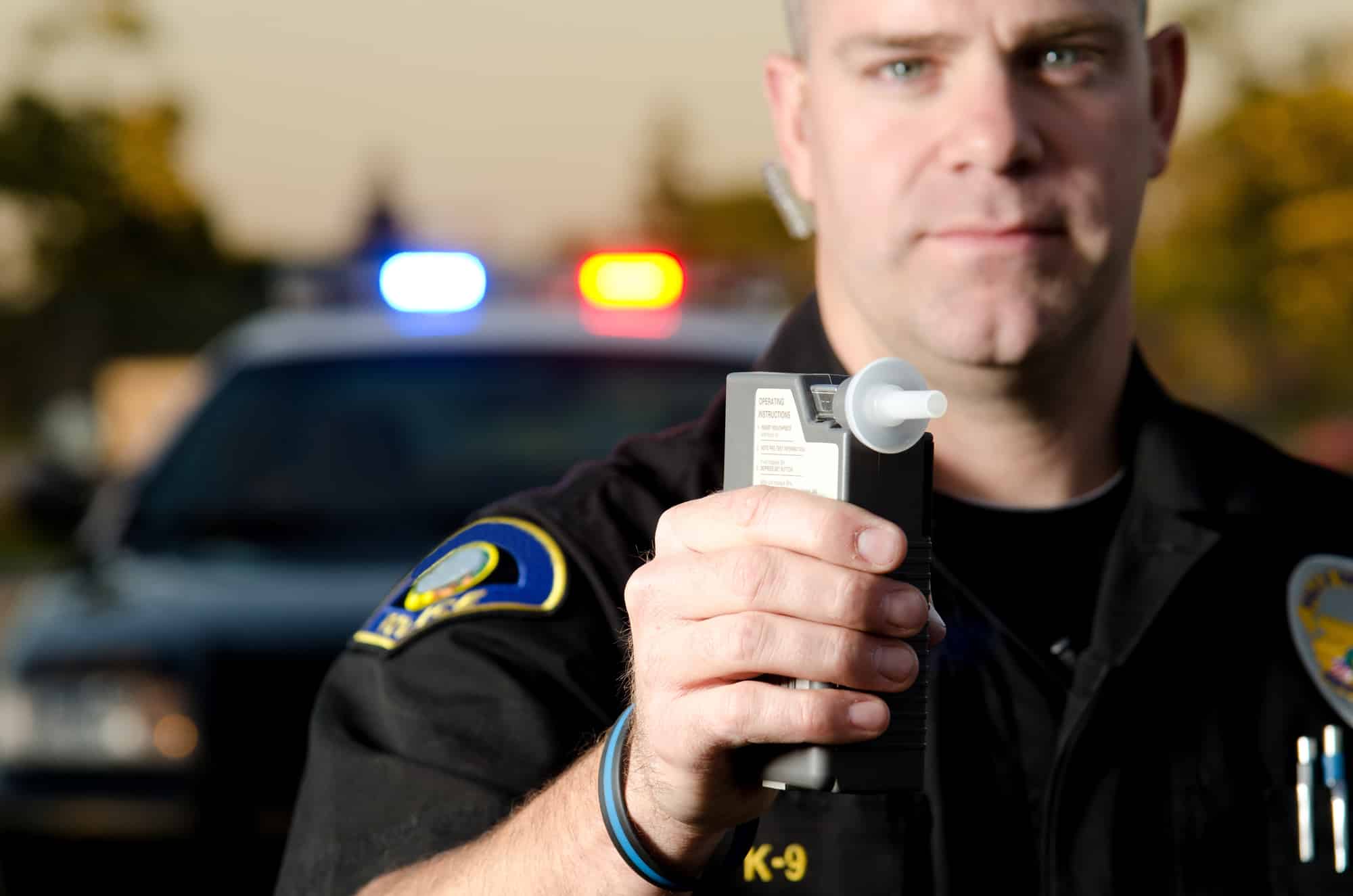
Police officer holding a breathalyzer at a DUI traffic stop

Spokane, WA DUI Frequently Asked Questions

Have you been arrested for DUI in Spokane?

You may have questions about what comes next, including what penalties you face and how the law views different circumstances surrounding DUI charges.

Below, we have identified some of the most frequently asked questions that people may have about DUI law in Washington State. Be sure to contact your DUI attorney at Bugbee Law Office, P.S. today for assistance on how to begin building a strong defense to fight your charges!

QUESTION 01

What are the legal blood alcohol limits for DUI?

According to Washington law, the legal blood alcohol limit is:

QUESTION 02

Why are you asked to take two different breath tests? Can I refuse the tests?

When you are pulled over by an officer on suspicion of drunk driving, they will administer a roadside breath test in order to determine whether there is probable cause to arrest you for DUI. The results of this test will not be seen in court, but the results of the second breath test given at the police station can be.

Because Washington has an “implied consent” law, it is not in the best interests of the offender to refuse these tests. Since they are seen as a condition for driving, your license may be suspended for one year if you refuse.

QUESTION 03

Can I lose my driver’s license for DUI?

Your license can be suspended if you are convicted of DUI. For a first offense, there is a 90-day to 1-year suspension. A second DUI offense carries a suspension of 2 years to 900 days. If there is a third DUI offense, your license may be suspended for 3 to 4 years. In all three cases, an ignition interlock device (IID) will be installed on your vehicle.

QUESTION 04

What is a marijuana DUI?

Driving under the influence of marijuana when you have a blood THC content of over 5 nanograms per milliliter of blood is grounds for this charge. This limit went into effect in response to marijuana decriminalization Initiative-502.

Although there is still some controversy about how much is enough to impair your driving, especially if you are a regular user, the 5 nanogram limit applies for all people over the age of 21, even if you are a cannabis patient. Persons under the age of 21 are not permitted to have any THC in their system while driving. The consequences for a marijuana-related DUI are the same as those for an alcohol-related DUI offense.

QUESTION 05

What is a felony DUI?

Under current Washington law, a DUI can generally be charged as a felony if a person has three or more qualifying prior offenses within 15 years, or has certain specified earlier convictions, such as vehicular homicide or vehicular assault committed while under the influence. Penalties for felony DUI can include a $10,000 fine and up to 5 years of jail time.

QUESTION 06

If I have been convicted of DUI, will I go to jail?

Depending on your number of prior DUI offenses and the severity of the offense, jail times will vary. Jail times are also dependent on whether or not your BAC was over or under .15%. First-time offenders can be jailed for a mandatory minimum of 24 hours and up to 1 year, 30 days to 1 year for second-time offenders, and 90 days to 1 year for a third offense.

QUESTION 07

What if I was lawfully prescribed my medication? Is it still DUI?

Yes. Under Washington law, you can be charged with DUI even if you are taking medication legally prescribed by your doctor. Unlike alcohol-related DUI cases, there is no single legal blood concentration limit that establishes impairment for prescription medications. The prosecution must establish that the driver was under the influence of or affected by the medication under Washington’s DUI laws.

FREE CASE EVALUATION

Have Any Further Questions?

Have any further questions not covered here? Contact the Spokane DUI attorneys at Bugbee Law Office, P.S. for more information.

FAST, FREE CONSULTATION

Contact Bugbee Law Today!

Consult Form
Your information is strictly confidential. Read our privacy policy HERE.

The information on this website is general information, not legal advice. Every case is different, and past results do not guarantee a similar outcome. Read the full disclaimer.